
Fijian Competition & Consumer Commission (FCCC)
Fijian Competition & Consumer Commission (FCCC)

Fiji
Sectors Regulated:
Electricity, Natural Gas, Fuel
- SUVA OFFICE (HQ)
Employers Hub, 42 Gorrie Street
P. O. Box 5031, Raiwaqa
Suva, Fiji - (+679) 8921 991
- helpdesk-at-fccc.gov.fj
- https://fccc.gov.fj/
Regulatory Authority General Information
- Joined ERRA in 2026
- Established in 2010
Responsibilities
- Legal basis/ mandate
- Fijian Competition & Consumer Act 2010 and Electricity Act (Fiji) 2017.
- Responsibilities
- • Access Agreements: Provision of advice to the Minister about proposed access agreements; Maintenance of register of access agreements
- • Access Regimes: Facilitation of negotiations about access to infrastructure facilities or services under access regimes; Arbitration of disputes about access to infrastructure facilities or services under access regimes
- • Regulated Industry: If, under a law relating to regulated industry, the referring authority delegates to FCCC the power to impose, modify or revoke conditions in respect of licenses granted under that law, FCCC to impose, modify and revoke those conditions in accordance with the relevant delegation
- • Acquisition of goods or services: Promote the interests of consumers and persons negotiating or considering the acquisition of goods or services as consumers and to assist, them to a greater awareness in relation to their assessment and use of goods or services; Collect, examine and disseminate information in respect of matters affecting or likely to affect the interests of consumers or persons negotiating or considering the acquisition of goods or services as consumers
- • Consumer Complaints: Receive and consider complaints concerning matters affecting or likely to affect the interests of consumers or persons negotiating or considering the acquisition of goods or services as consumers and, if FCCC is of the opinion that such action is warranted, to investigate the complaints and take such action in respect thereof as seems proper to FCCC; Investigate fraudulent or deceptive practices in relation to matters that affect or are likely to affect the interests of consumers or persons negotiating or considering the acquisition of goods or services as consumers and to take such action in respect of the practices as seems proper to the FCCC
- • Information: Advise and assist persons who seek from FCCC information or guidance on matters affecting or likely to affect their interests as consumers or as persons negotiating or considering the acquisition of goods or services as consumers; Encourage and undertake the dissemination of information concerning consumer affairs to producers, manufacturers and suppliers of goods or services
- • Review of commercial activities Review all commercial activities and collect information regarding such activities
- • Fix and declare maximum prices: Fix and declare maximum prices and quantities, for goods and services and rents
- • Authorizations and approvals: Issue authorizations and approvals by way of licenses for the provision of goods and services in regulated industries to which the functions, authority and powers are granted by the legislation and regulations underpinning any regulated industry to which it is to become the principal regulator; and
- • Other functions: Discharge such other functions as the Minister may direct or are conferred on FCCC by or under the FCCC Act 2010 or any other written law.
- Authorities
- • Independence: Independent regulator.
- • Supervised by: Ministry of Trade, Co-operatives, Small and Medium Enterprises and Communication.
Organisational Structure
-
- Organigram
- Internal Structure:
- • Governance Level: 6 (Chairperson and Board Members)
- • Executive Management: CEO
- • Total Number of Employees: 116
- Budget
- Government (52.2%), Regulation fees (46.5%) and Licensing (1.3%)
Annual Report
Fiji Energy Sector Overview
- Fiji is a Small Island Developing State (SIDS) comprising more than 300 islands, is heavily dependent on fossil fuels in its industrial, transportation, commercial and electricity generation sectors. Electricity generated in the country, however, comes from approximately 54 percent of renewable energy sources. A significant contributor to the statistics is hydropower while a modest contribution is from biomass, solar and wind. The country’s energy sector is undergoing a transition towards increased renewable energy penetration through the National Energy Plan and National Development Plan while maintaining affordability, reliability, and energy security for consumers. The regulatory environment seeks to balance sustainable development objectives, consumer protection, utility performance, and investment requirements necessary to support Fiji’s long-term energy transition goal to achieve 100% renewable energy by 2030.
FCCC’s Role in Energy Regulation
- Regulator of Fiji’s Energy Sector under the Electricity Act 2017, Electricity Regulation 2019 and FCCC Act 2010
- • Oversees licensing, tariffs, and compliance monitoring and undertakes industry reviews and regulatory assessments
- • Ensures consumer protection, service quality, and transparent governance
- • Supports public-private partnerships and encourages private sector investment in renewable energy
- • Promotes reliable and affordable electricity access for rural and maritime communities by regulating prices of industries such as electricity, water, telecommunications, fuel and LPG among other declared regulated industries
- • Contributes towards Fiji’s national targets of:
- – Net Zero Carbon Emissions by 2050
- – 100% Renewable Electricity Generation by 2030
- • Supports economic growth, employment opportunities, and community resilience
- • Strengthens accountability, affordability, and long-term sustainability within Fiji’s renewable energy sector
- Electricity generation licenses issued by FCCC (2019–2025)
- The table below shows the electrical generation license issued by FCCC from 2019 for different types of energy sources.
| License type | 2019 | 2020 | 2021 | 2022 | 2023 | 2024 | 2025 |
|---|---|---|---|---|---|---|---|
| Backup Generator | 4 | 48 | 44 | 64 | 34 | 13 | 109 |
| Grid Solar | 7 | 30 | 27 | 24 | 14 | 28 | 35 |
| Hybrid Solar | – | – | – | – | – | 4 | 13 |
| Off Grid Solar | – | – | – | – | – | 6 | 14 |
| Off Grid Diesel | – | 14 | 7 | 2 | 1 | – | 6 |
Investor’s Guide
- Why Invest in Fiji’s Energy Sector?
- Fiji offers a growing and evolving energy market driven by national commitments to energy security, renewable energy development, and climate resilience. The Government of Fiji has established ambitious targets, including achieving 100% renewable electricity generation by 2030 and net-zero carbon emissions by 2050.
- As Fiji’s Independent Electricity Regulator, FCCC supports a transparent and predictable regulatory environment that promotes investor confidence while safeguarding consumer interests.
- Key Investment Opportunities
- • Utility-scale and distributed renewable energy projects, including solar, hydro, wind, biomass, and hybrid systems.
- • Rural and maritime electrification initiatives under the Fiji Rural Electrification Fund (FREF) and Mini-Grid Regulatory Framework (MGRF) supported by UNDP.
- • Energy storage, grid modernization, and resilient energy infrastructure projects.
- • Innovative technologies that enhance energy efficiency, reliability, and sustainability.
- Regulatory Support
- FCCC facilitates investment through:
- • Transparent licensing and regulatory processes.
- • Predictable tariff and economic regulatory frameworks.
- • Consumer protection and market oversight mechanisms.
- • Stakeholder engagement and evidence-based regulatory decision-making.
- FCCC remains committed to fostering a stable regulatory environment that supports sustainable investment, innovation, and long-term growth within Fiji’s energy sector.
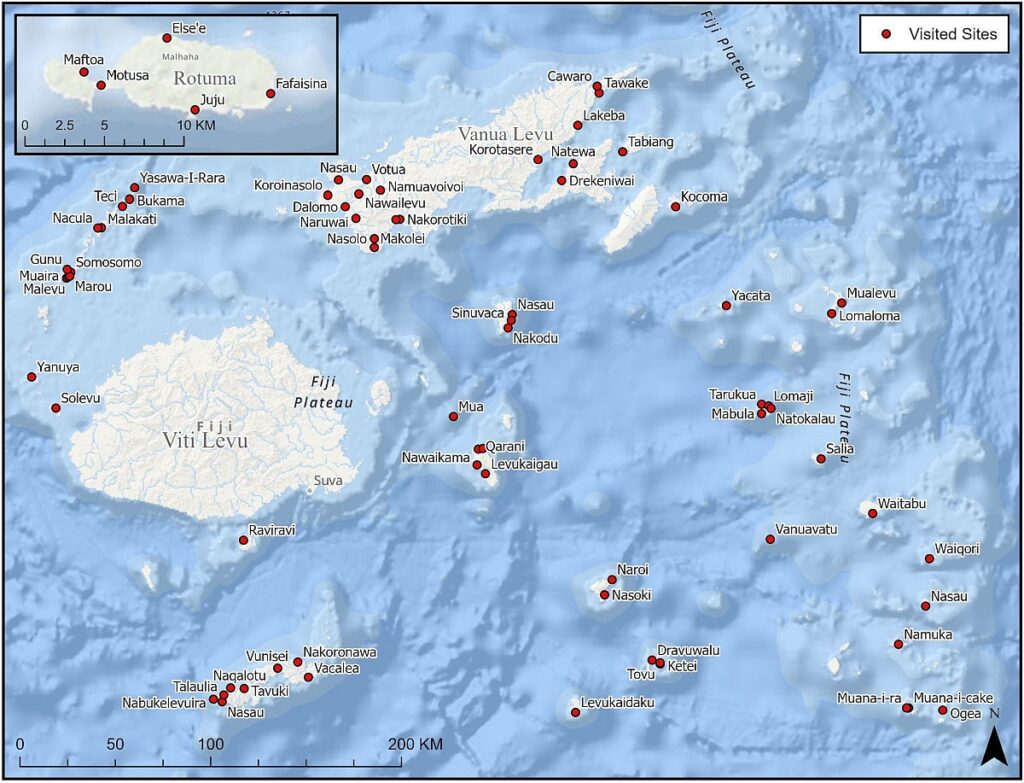
- The illustration above shows the 75 sites identified under the FREF project by UNDP. Source: UNDP
- Regulatory Framework for Investors
- FCCC administers transparent licensing, tariff-setting and methodologies, and compliance frameworks designed to promote investor confidence, consumer protection, and sustainable sector development. Detailed regulatory guidelines, application procedures, and tariff methodologies are available upon request or through FCCC’s official publications available on the FCCC website.
FCCC’s Current Regulatory Priorities
- • Fuel Market Stability and Energy Security: Monitoring fuel and LPG markets to address supply disruptions, price volatility, and energy security risks.
- • Economic Regulation and Consumer Protection: Regulating fuel, LPG, and electricity pricing while safeguarding consumer interests and promoting market transparency.
- • Electricity Sector Oversight: Undertaking tariff reviews, utility performance monitoring, and regulatory oversight to support reliable and sustainable electricity services.
- • Renewable Energy and Climate Resilience: Supporting renewable energy integration and regulatory frameworks including the Mini Grid Regulatory Framework and FREF projects that strengthen system resilience and sustainability.
- • Rural Electrification and Mini-Grid Regulation: Strengthening regulatory oversight of FREF projects and mini-grids to support sustainable and equitable energy access.
- • Capacity Building and International Cooperation: Strengthening regulatory expertise through international partnerships, knowledge exchange, and professional development initiatives.
Regulatory Capacity Building
- FCCC actively supports professional development and capacity building initiatives aimed at strengthening regulatory expertise within the organisation. Priority areas include:
- • Utility regulation and tariff methodologies
- • Renewable energy regulation
- • Consumer protection and dispute resolution
- • Regulatory impact assessment
- • Market monitoring and economic analysis
- • Energy sector governance and compliance
Key Publications
- Additional information on FCCC’s regulatory activities, annual reports, strategic plans, market studies, and consumer protection initiatives can be accessed through the FCCC website.
Regulating Energy in a Small Island Developing State – Fiji Perspective
- Energy regulation in Fiji presents unique opportunities and challenges associated with geographic dispersion, climate vulnerability, infrastructure resilience, and the transition to cleaner energy sources.
- FCCC recognises the importance of developing regulatory approaches that support reliable service delivery, consumer welfare, and sustainable investment while addressing the realities faced by island economies. Through collaboration with regional and international partners, FCCC continues to strengthen its regulatory capacity and contribute to discussions on effective energy regulation in Small Island Developing States.