Goga Daraselia

2025-11-04

Blackout in Spain – First Regulatory Considerations | Presentations & Recording

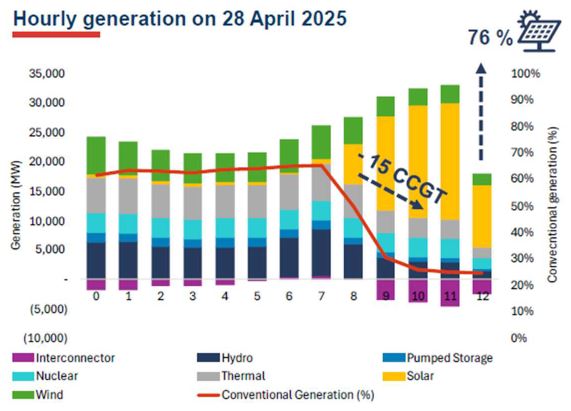
On April 28th, 2025, the whole Iberic Peninsula (Spain and Portugal) experienced its most severe blackout in history. Based on currently available research, it wasn't an excess of renewables that caused the collapse—it was the delay to integrate it properly through a modern regulation.
2025-10-30

Summary of ERRA Workshop on Renewable Collective Self-Consumption and Energy Communities 2025

The Energy Regulators Regional Association Workshop on Renewable Collective Self-Consumption and Energy Communities, held on 14 October 2025 and hosted by the Energy Market Regulatory Authority of Türkiye, offered a comprehensive platform to explore how collective energy initiatives can transform power systems towards greater decentralisation, flexibility, and citizen engagement.
2025-09-16

CRE France Report: Integration of Small Modular Reactors (SMR/AMR) into Energy Systems (available only in French language)

The Report is prepared by the Energy Regulatory Commission (CRE) on the integration of small modular reactors (SMR/AMR) into energy systems. It highlights that advanced small modular reactors (AMRs) show promise in terms of innovation and diversity of use, particularly those that produce heat at temperatures above 300°C.
2025-09-11

ERRA Webinar: Natural Gas Markets and Network Tariffs Regulation

In this one-day intensive webinar, participants will explore medium and low-pressure gas networks, the role of gas storage in both gas trading markets and the security of supply, different gas transportation infrastructure, tariff methodologies and gas network code. It will also delve into the growing role of biogas and hydrogen across the world in terms of developing alternatives to natural gas.
2025-09-01

ERRA Regulatory Story of the Quarter: The Evolution of the Energy Market Enforcement by ERO Czech Republic

Due to energy crisis of 2021 to 2022, the Energy Regulatory Office (ERO) of the Czech Republic experienced a dramatic shift in its role as it operated almost as a “crisis hotline”. This environment created the necessity to introduce the new measures and legislative tools that make ERO more efficient and effective in its oversight activities.